Guide · 4 min read · Aug 25, 2026
Why the same food doesn't always trigger you
You ate the same breakfast on Monday and felt fine. Wednesday, the exact same breakfast, and you spent the morning near the bathroom.
It's one of the most frustrating parts of trying to find a food trigger: the food doesn't always behave. That inconsistency makes people give up on tracking altogether, since it feels like the data doesn't add up. It usually does. It's just not as simple as "safe" or "unsafe."
It's rarely one meal, one reaction
A lot of food reactions are about how much, not just what. A small amount of something might sit fine. A larger portion, or that same food stacked on top of something else you had earlier in the day, can push you over a threshold the first amount never reached. Two servings of the exact same breakfast can land on two very different sides of that line, depending on what else was already in your system.
What else changes the equation
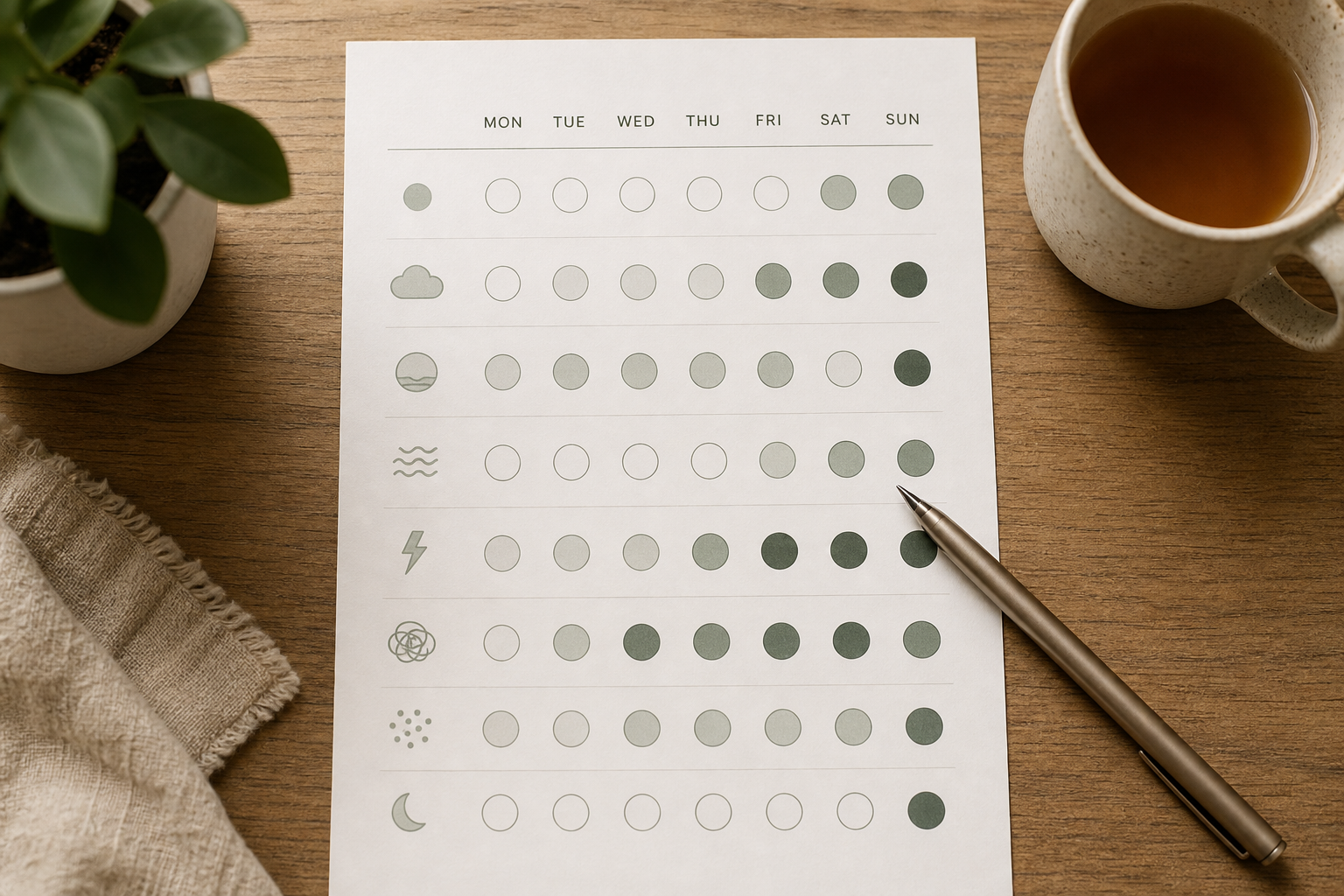
The food is one variable, not the only one. Stress, poor sleep, alcohol the night before, being unwell, even where you are in a monthly cycle, can all shift how your body handles the exact same meal. A food that's usually fine can cause a reaction on a rough week, and the same food can pass without issue once things settle.
If that sounds like your body is being unpredictable, it isn't. It's responding to more than one input at a time. The food matters, it's just not the whole picture.
Why a simple yes-or-no diary misses this
"Ate dairy, felt fine" and "ate dairy, felt awful" look like a contradiction if that's all you're logging. The pattern is still there, it's just hiding in details a basic diary doesn't capture: how much, what else that day, how you were sleeping, how stressed the week had been. Without that, two entries for the same food can look random when they're not.
What actually helps you see the pattern
You don't need to weigh every meal. What helps is logging enough around each entry, portion size, other meals that day, how you slept, so that when you look back, the difference between the good day and the bad day is visible instead of a mystery. Across enough entries, a threshold starts to look like a threshold instead of bad luck.
An inconsistent reaction isn't proof the food is innocent. It's usually proof there's more than one factor at play, and that's still worth tracking down.
A faster way to see it
This is exactly where BellyMystery earns its keep. Logging a meal, even with a photo, takes under 30 seconds, and a stool or symptom entry takes under 15. As entries build up, the app looks across all of it, portions, timing, other exposures the same day, for patterns that would be nearly impossible to spot by eye. It shows you what it finds in plain English, framed as something worth discussing with a doctor, never as a verdict on any one food.