Guide · 4 min read · Aug 25, 2026
What to bring to your GI or dietitian appointment
The appointment is finally booked. Then the receptionist, or the doctor, asks what's going on, and "my stomach's been off for a while" is all that comes out.
Appointments move fast. A vague complaint tends to get a vague answer: try cutting out gluten, see how it goes, come back in six weeks. Here's how to walk in with something a doctor can actually work with.
Why "it's been bothering me for a while" doesn't get you far
A doctor or dietitian is usually working with fifteen or twenty minutes, and most of that goes to history-taking. If the only history you can offer is "it's been a few weeks, comes and goes," there isn't much to build a plan on. You'll likely leave with a general suggestion and a follow-up appointment, rather than a real next step.
That's not a reflection on the doctor. It's what happens when the only evidence in the room is a memory of a rough month.
What to log in the two weeks before
You don't need months of data to make an appointment worthwhile. Two to three weeks of consistent logging is usually enough to show whether anything repeats. Four things are worth having ready:
- What you ate, by ingredient. Not "dinner," but what was actually in it.
- Symptoms, with rough timing. When they started, not just that they happened that day.
- Stools, if it's a digestive issue. Frequency and consistency, using the same scale each time so it's comparable.
- Anything you already suspect, and why. Even a hunch is worth noting, as long as it's labeled as a hunch and not stated as fact.
Make it something they can skim in thirty seconds
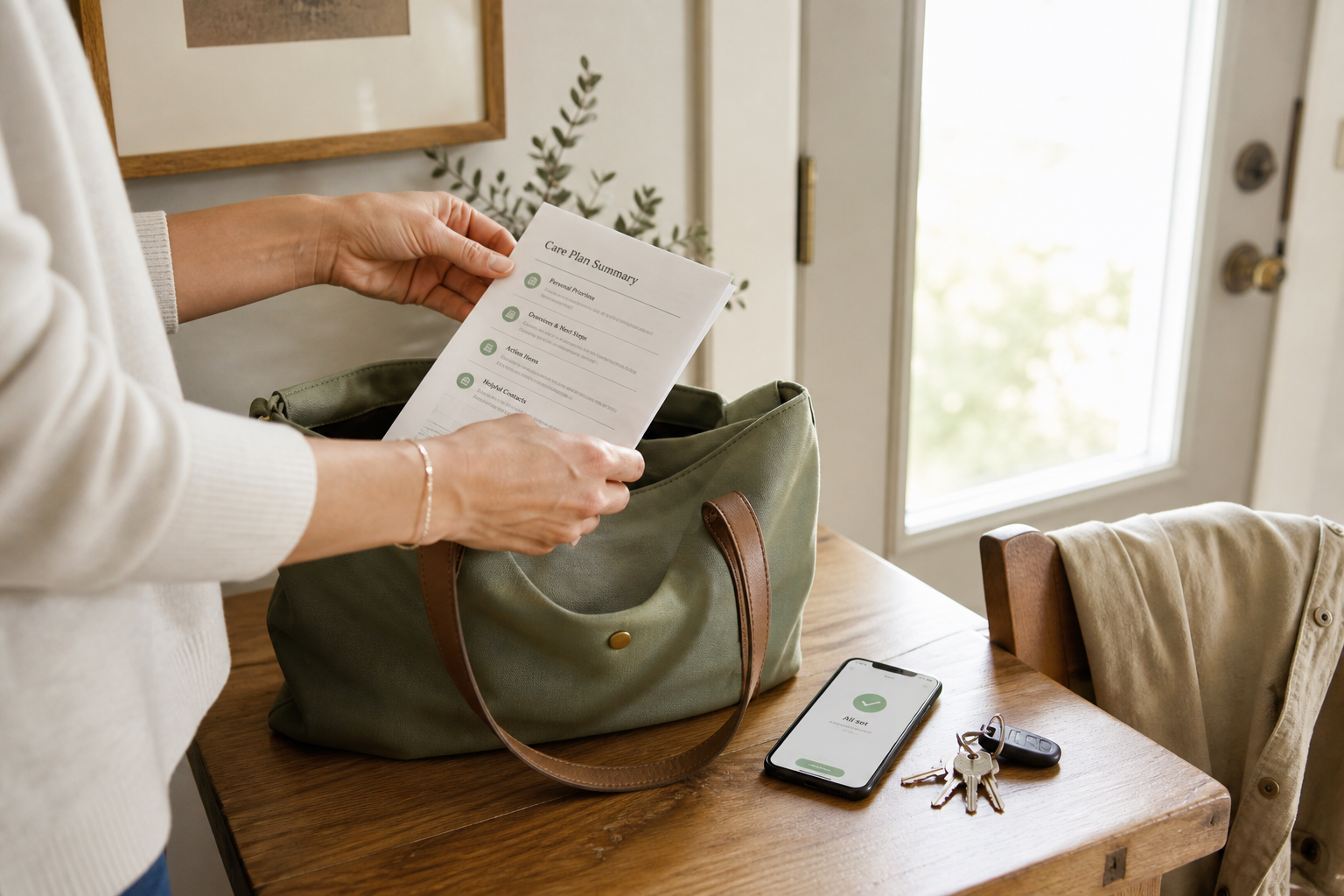
A stack of notes-app entries or a notebook full of half-finished sentences isn't much better than showing up with nothing. What helps is one page, in order, that a doctor can scan on the spot: the days you logged, what stood out, and anything that repeated more than once.
"Dairy shows up before four of my six bad days" is something a doctor can respond to. Forty pages of raw notes usually aren't.
Bring the data, not the diagnosis
The goal isn't to walk in and announce what's wrong. It's to walk in with what you've noticed, clearly separated from what you've concluded. "I think it's dairy" is a guess. "Here's what I've noticed over the past three weeks" is a starting point for an actual conversation.
You're not there to diagnose yourself. You're there to hand over something real instead of a vague complaint, and let the conversation start from there.
A faster way to get there
This is what BellyMystery's export is built for. Every meal, symptom, and stool you log turns into a clean summary you can bring to an appointment, either printed or on your phone. It also means you're not spending the first ten minutes of the visit reconstructing the last three weeks from memory. Logging a stool takes under 15 seconds, a photo meal under 30, and everything saves to your phone right away so there's nothing to lose between now and your appointment.